
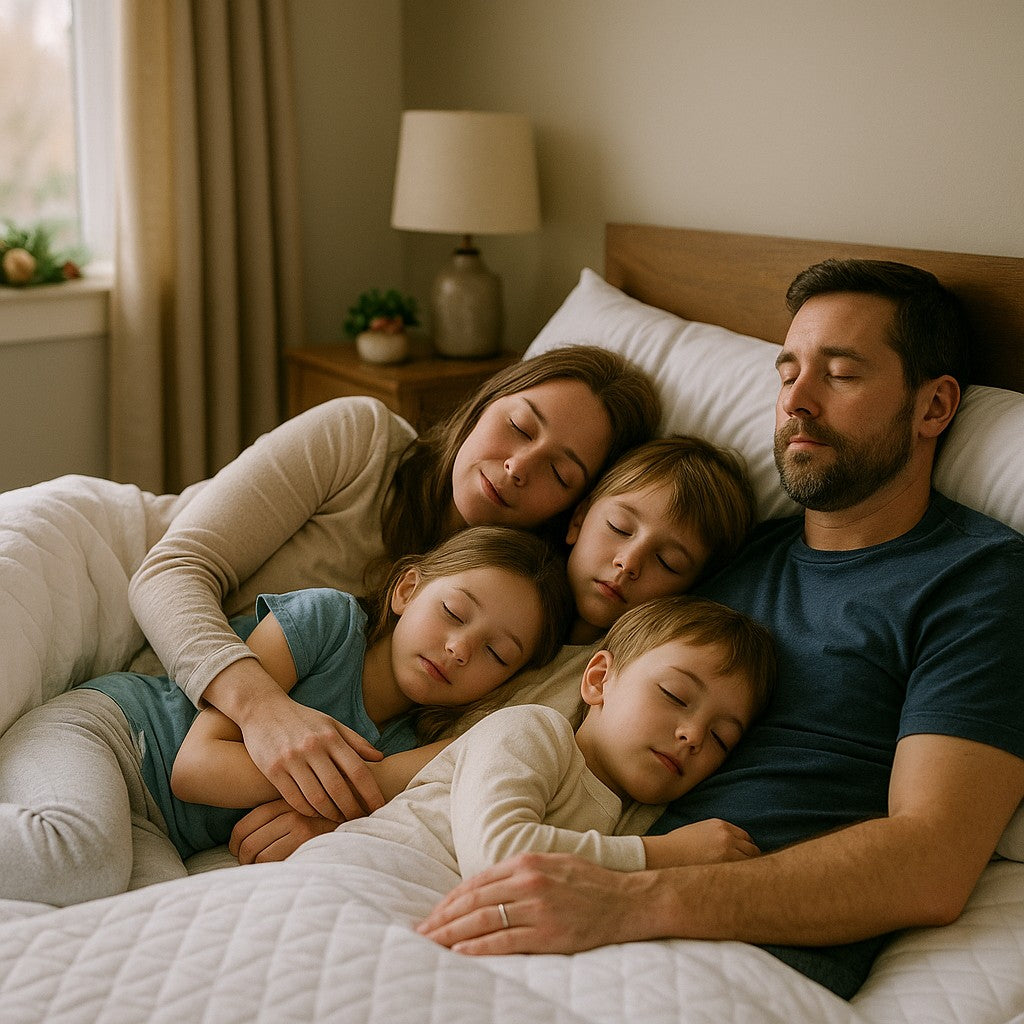
Quick Answer: What temperature for sleeping? 15-19°C (60-67°F). Cooler than most people expect. Your body temperature drops when you sleep, and a cool room helps that happen.
In This Article:

Quick Answers
What temperature for sleeping? 15-19°C (60-67°F). Cooler than most people expect. Your body temperature drops when you sleep, and a cool room helps that happen.

How much sleep do I need? 7-9 hours for adults. But quality matters too - uninterrupted sleep is better than 9 hours of tossing and turning.
How do I fall asleep faster? Same bedtime every night. No screens an hour before bed. Keep it cool and dark. And honestly, a supportive mattress helps more than people realize.
Why December Destroys Your Sleep
The holidays are supposed to be joyful, but for many people they're also the most sleep-deprived time of year. Between financial pressure, family dynamics, packed schedules, and the general chaos of December, your nervous system stays in overdrive when it should be winding down for rest.
Understanding why holiday stress kills sleep helps you fight back.
What Stress Does to Sleep
When you're stressed, your body produces cortisol and adrenaline. These hormones evolved to help you deal with immediate threats, but modern stress triggers them constantly. The result:
- Racing thoughts at bedtime. You lie down and your brain starts reviewing the to-do list, replaying conversations, worrying about gifts, money, or family.
- Lighter sleep. Elevated stress hormones keep your body in a state of readiness, preventing the deep sleep stages where restoration happens.
- Earlier waking. Cortisol naturally rises in the early morning, but stress can push that spike earlier, waking you at 4 AM with your mind already churning.
- Physical tension. Tight shoulders, clenched jaw, headaches. Your body holds stress in ways that make comfortable sleep difficult.
Holiday-Specific Sleep Killers
Financial Pressure
Gift buying, travel costs, hosting expenses. Money worries are one of the biggest sources of sleep-disrupting stress. Lying awake calculating credit card bills or wondering how to afford everything is a common December experience.
Family Dynamics
Even happy family gatherings can be stressful. Navigating relationships, managing expectations, dealing with difficult relatives. The anticipation alone can keep you up at night.
Schedule Overload
Parties, school events, work functions, shopping trips. December calendars get packed, leaving little time for rest and recovery. You end up trying to sleep when you're already exhausted and overstimulated.
Travel
Different beds, different time zones, shared spaces with family. Travel disrupts sleep even without the stress layer on top.
Breaking the Cycle
You can't eliminate holiday stress entirely, but you can protect your sleep:
Create a Wind-Down Buffer
Give yourself at least 30 minutes of calm before bed. No screens, no planning, no problem-solving. Read, take a bath, do some gentle stretching. Your brain needs transition time.
Keep Some Structure
Try to maintain consistent sleep and wake times, even with a busy social calendar. Staying up until 2 AM one night then trying to sleep at 10 PM the next confuses your internal clock.
Write It Down
If racing thoughts are the problem, keep a notebook by the bed. Write down what's on your mind, then tell yourself you'll deal with it tomorrow. Sometimes getting thoughts out of your head and onto paper is enough to quiet them.
Physical Release
Exercise helps burn off stress hormones. Even a 20-minute walk can make a difference. Just don't exercise too close to bedtime.
Your Sleep Environment as a Sanctuary
When the rest of your life feels chaotic, your bedroom should feel like a refuge:
- Keep it clutter-free. Piles of presents to wrap, shopping bags everywhere, work materials. These all create visual stress. Keep your bedroom clear.
- Make it comfortable. Quality sheets and a supportive mattress make getting into bed something you look forward to.
- Control temperature. Keep it cool (15-19°C). Stressed bodies run warm, and a cooler room helps.
- Block stimulation. No TV, no phone, minimal light. Your bedroom is for sleep.
When Stress Becomes Insomnia
Short-term stress-related sleep problems usually resolve when the stressor passes. But if you:
- Can't fall asleep for more than 30 minutes regularly
- Wake up multiple times per night
- Feel exhausted during the day
- Have been struggling for more than a few weeks
The problem may need more attention. Cognitive behavioral therapy for insomnia (CBT-I) is highly effective and doesn't involve medication. Your doctor can also rule out other sleep disorders.
Post-Holiday Recovery
Most people need a couple of weeks after the holidays to get their sleep back on track. Don't expect to bounce back immediately. Be patient with yourself and focus on:
- Resuming a regular schedule
- Cutting back on alcohol and heavy foods
- Getting back to normal activity levels
- Allowing extra time for rest
Investing in Better Sleep
If this holiday season has highlighted that your sleep setup isn't working, the new year is a good time to address it. A better pillow, an adjustable bed for stress-related tension, or a mattress replacement might be what you need.
Stop by Mattress Miracle on West Street in Brantford. We've helped families through stressful holidays since 1997.
441½ West Street, Brantford. Same-day delivery available.
Medical Disclaimer: The information in this article is for educational purposes only and does not constitute medical advice. If you are experiencing chronic pain, sleep disorders, or other health conditions, please consult a qualified healthcare professional.
Frequently Asked Questions
How long does a mattress typically last?
Most quality mattresses last 7-10 years with proper care. Signs to replace include visible sagging over 1 inch, waking with pain, or sleeping better in hotels. Rotating your mattress regularly and using a protector extends its lifespan.
What firmness level is best for most people?
Medium-firm (around 6 on a 10-point scale) suits most sleepers and provides good spinal support. However, individual preference matters - side sleepers often prefer softer, while stomach sleepers need firmer. Try before you buy when possible.
Do I need a boxspring with a new mattress?
Most modern mattresses work fine without a traditional boxspring. Platform beds, slatted foundations (slats 3 inches apart or less), and adjustable bases all work well. Check your mattress warranty requirements.
How to Make the Best Sleep Decision
Follow these steps to choose the right sleep with confidence.

Step 1: Research your options thoroughly
Spend time understanding what is available in the sleep market. Read articles, compare features, and learn what separates quality from marketing. Informed shoppers consistently make better purchasing decisions.
Step 2: Define your priorities and budget
List what matters most to you in a sleep: comfort, durability, style, size, or specific features. Set a budget range that reflects the importance of this purchase to your daily life. Quality sleep affects everything.
Step 3: Seek expert advice
Talk to someone with real experience in sleeps. At Mattress Miracle, Brad has been helping families find the right sleep solutions since 1997. Expert guidance saves you from expensive mistakes and buyer's remorse.
Step 4: Test and compare before committing
Always try a sleep before buying when possible. Visit our Brantford showroom at 441 1/2 West Street to test options side by side. Your body knows what feels right. Trust that more than any online review.
Step 5: Buy with confidence from a trusted retailer
Choose a retailer that stands behind their products with real warranty support and after-sale service. Mattress Miracle has been Brantford's trusted sleep store since 1997. Call 519-770-0001 or visit 441 1/2 West Street.
Visit Mattress Miracle
Find us at 441 1/2 West Street, Brantford, Ontario. Rated 4.9 stars on Google. Family-owned since 1997.
Sources
- Kalmbach DA, Anderson JR, Drake CL. The impact of stress on sleep: Pathogenic sleep reactivity as a vulnerability to insomnia and circadian disorders. J Sleep Res. 2018;27(6):e12710. DOI: 10.1111/jsr.12710
- Ekholm B, Spulber S, Adler M. A randomized controlled study of weighted chain blankets for insomnia in psychiatric disorders. J Clin Sleep Med. 2020;16(9):1567-1577. DOI: 10.5664/jcsm.8636
- Walker M. Why We Sleep: Unlocking the Power of Sleep and Dreams. Scribner. 2017.
- Health Canada. Mental health and sleep. Public Health Agency of Canada. canada.ca/public-health
Visit Our Brantford Showroom
We are located at 441½ West Street in downtown Brantford. Free parking available, wheelchair accessible. Our team does not work on commission, so you get honest advice based on your needs.
Mattress Miracle , 441½ West Street, Brantford, ON · (519) 770-0001
Hours: Monday–Wednesday 10am–6pm, Thursday–Friday 10am–7pm, Saturday 10am–5pm, Sunday 12pm–4pm.