
How to Choose Between Buckwheat and Latex Pillows
1 Understand the Basic Difference
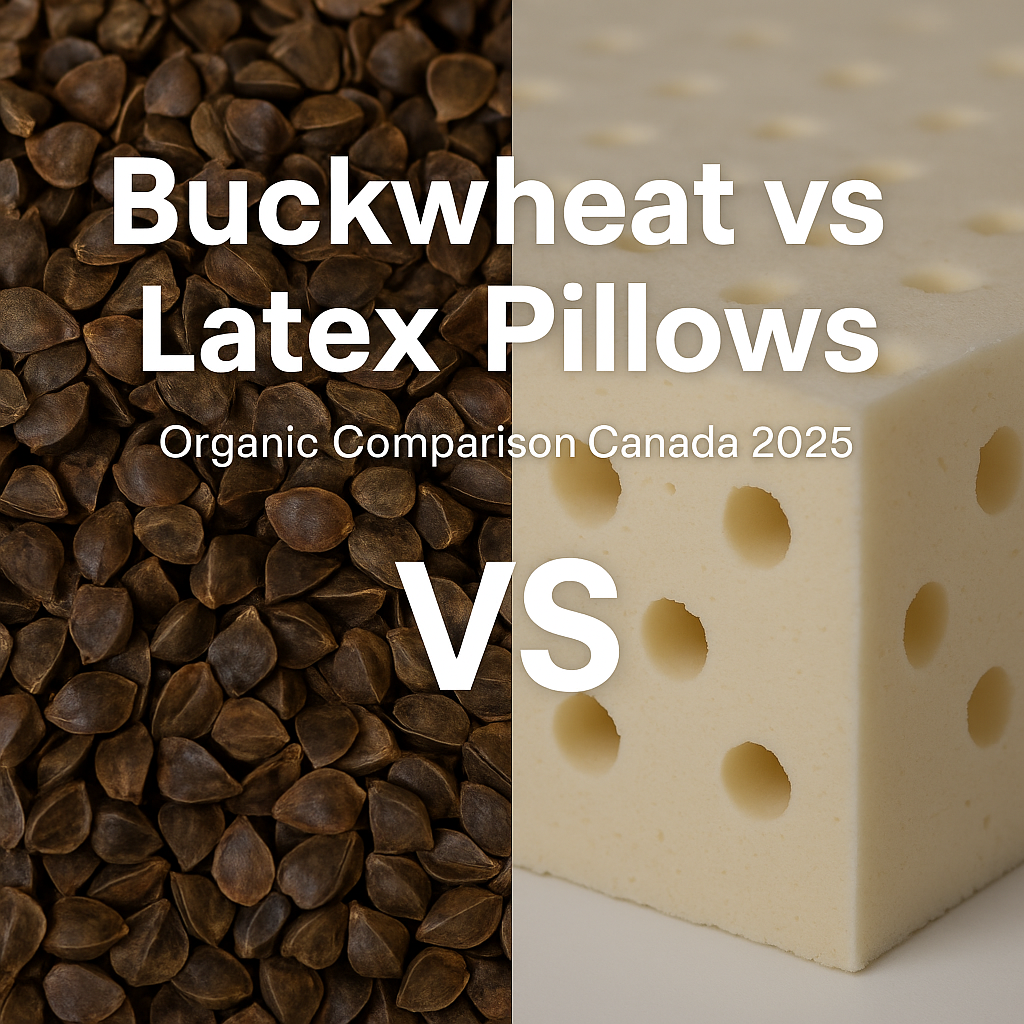
Buckwheat pillows are filled with hulls (shells) from buckwheat seeds that shift and conform to your head shape. Latex pillows are solid foam (usually with ventilation holes) that provide consistent, responsive support. Buckwheat is adjustable and breathable. Latex is durable and resilient. They feel completely different.
2 Consider Noise Sensitivity
Buckwheat hulls make a soft rustling sound when you move your head. Some people find it soothing (like white noise), others find it distracting. Latex pillows are completely silent. If you're a light sleeper or easily bothered by sound, test a buckwheat pillow before buying. The noise is the main dealbreaker for most people.
3 Evaluate Adjustability Needs
Buckwheat pillows let you add or remove hulls to customize loft and firmness exactly to your preference. Latex pillows come in fixed heights and firmness levels. If you're unsure about your ideal pillow height or sleep position varies, buckwheat offers more flexibility. If you know what you need, latex provides consistent support.
4 Think About Temperature and Airflow
Both options sleep cool. Buckwheat hulls have natural air pockets that promote excellent airflow. Latex (especially with pin-hole ventilation) also breathes well and doesn't trap heat like memory foam. If you sleep hot, either choice works. Buckwheat might have a slight edge in extreme heat.
5 Compare Maintenance Requirements
Buckwheat hulls should be aired out monthly and replaced every 2-3 years as they break down. The cover needs regular washing. Latex pillows just need spot cleaning and occasional cover washing. They last 5-7 years with minimal maintenance. If you want low-maintenance, latex wins.
6 Check for Allergies
Natural latex can cause reactions in people with latex allergies. Buckwheat hulls are naturally hypoallergenic and resist dust mites. If you have latex sensitivity, buckwheat is the safer choice. Both materials are naturally antimicrobial and good for allergy sufferers otherwise.
7 Try Both If Possible
The feel difference between buckwheat and latex is dramatic. You really need to rest your head on both to know which you prefer. We stock several organic pillow options, including buckwheat and latex, at our Brantford store (441 1/2 West Street). Come test them for as long as you need. Call 519-770-0001 if you want to discuss your specific needs first.
Find Your Perfect Mattress at Mattress Miracle
We are a family-owned mattress store in Brantford, helping our community sleep better since 1997. Come try mattresses in person and get honest, no-pressure advice.
441 1/2 West Street, Brantford, Ontario
Call 519-770-0001Frequently Asked Questions
What Are Buckwheat Hull Pillows?
Buckwheat hull pillows are filled with the outer shells of buckwheat seeds - a grain unrelated to wheat. This traditional Japanese pillow filling has been used for over 1,000 years and offers a completely unique sleep experience.
🤔 Still Undecided?
Visit our Brantford showroom to feel both materials firsthand. Our sleep experts can help you determine which organic pillow aligns with your sleep needs and preferences.
Can I try before buying?
Natural latex pillows often come with sleep trials. Buckwheat pillows rarely offer trials due to hygiene concerns, making in-store testing crucial.
Which is better for neck pain?
Both can help neck pain when properly chosen. Buckwheat offers precise adjustability; latex provides consistent support. Your sleeping position and personal preferences determine which works better.
Are there hybrid options?
Some pillows combine materials (latex core with buckwheat hull adjustable layer), but pure materials typically perform better than combinations.
Related Reading
- How Do You Use A Wedge Pillow? All You Need
- Firm Pillow Guide: Buckwheat, Latex, and Hard Pillows Compared
- Best Pillows in Canada 2026: Memory Foam, Down, Latex and Buckwheat Compared
- Best Latex Pillows in Canada 2026
Quick Answer: Buckwheat hull pillows are filled with the outer shells of buckwheat seeds - a grain unrelated to wheat. This traditional Japanese pillow filling has been used for over 1,000 years and offers a completely unique sleep experience.
Natura Organic Pillows Complete Guide:
Complete Guide Hub - All 13 Articles
Expert analysis of two premium organic pillow materials to help you choose the perfect natural sleep solution
Quick Comparison Summary
| Feature | Buckwheat Hull | Natural Latex |
|---|---|---|
| Support Level | Firm, Adjustable | Medium-Firm, Consistent |
| Comfort | Unique, Adaptive | Responsive, Cushioning |
| Durability | 3-5 years (hulls) | 7-10+ years |
| Price Range | $60-$120 CAD | $150-$350+ CAD |
↔ Scroll to see full table
📖 11 min read

Understanding These Organic Pillow Materials
Both buckwheat hull and natural latex represent authentic organic pillow solutions, but they couldn't be more different in feel and function. After nearly 30 years helping Canadian families find the perfect pillow, we've seen how personal preference and sleeping style determine which material works best.

Why These Materials Matter
Unlike synthetic foam pillows filled with petroleum-based chemicals, both natural latex and buckwheat hulls are completely chemical-free, biodegradable materials that support healthy sleep.
Buckwheat Hull Pillows: Traditional Japanese Comfort
What Are Buckwheat Hull Pillows?
Buckwheat hull pillows are filled with the outer shells of buckwheat seeds - a grain unrelated to wheat. This traditional Japanese pillow filling has been used for over 1,000 years and offers a completely unique sleep experience.
Buckwheat Hull Benefits:
- Fully Adjustable Support: Add or remove hulls to customize firmness and loft
- Superior Air Circulation: Hulls create air channels for excellent breathability
- Conforms Precisely: Hulls shift to support exact head and neck contours
- Natural Temperature Regulation: Stays cool in summer, insulates in winter
- Completely Chemical-Free: No treatments, no off-gassing, no synthetics
- Budget-Friendly: Lower cost than premium latex options
Buckwheat Hull Drawbacks:
- Noise Factor: Hulls rustle when moving - not ideal for light sleepers
- Weight: Significantly heavier than other pillow types
- Adjustment Period: Unique feel requires 2-3 weeks to adapt
- Regular Maintenance: Hull replacement needed every 2-3 years
- Limited Availability: Fewer Canadian retailers carry quality buckwheat pillows
Best For Buckwheat Hull Pillows
- Side and back sleepers who need firm support
- Hot sleepers seeking maximum cooling
- Those wanting fully customizable pillow height
- Sleepers with neck pain requiring precise positioning
- Budget-conscious buyers seeking organic options
Natural Latex Pillows: Premium Organic Comfort
What Is Natural Latex?
Natural latex is harvested from rubber trees (Hevea brasiliensis) and processed into responsive, durable foam. Quality natural latex pillows like Natura use either Talalay or Dunlop processing methods to create consistent, supportive material.
Natural Latex Benefits:
- Consistent Support: Maintains shape and support night after night
- Responsive Comfort: Contours to head and neck, then springs back
- Exceptional Durability: Quality latex pillows last 7-10+ years
- Naturally Antimicrobial: Resists dust mites, mold, and bacteria
- Silent Sleep: No noise when moving during sleep
- Easy Care: Spot cleaning only, no special maintenance
- Proven Longevity: Maintains loft and support for years
Natural Latex Drawbacks:
- Higher Investment: Premium pricing reflects quality and durability
- Fixed Firmness: Less adjustable than buckwheat (though different densities available)
- Latex Allergies: Small percentage of people have latex sensitivities
- Initial Smell: Natural rubber odor fades within days
- Weight: Denser than synthetic alternatives
Best For Natural Latex Pillows
- All sleeping positions seeking responsive support
- Allergy sufferers needing dust mite resistance
- Those wanting long-term pillow investment
- Sleepers preferring consistent, reliable comfort
- Anyone seeking premium organic materials
Head-to-Head Comparison
Support and Firmness
Winner: Tie (Different Strengths)
- Buckwheat: Adjustable from soft to extra-firm by adding/removing hulls
- Latex: Consistent medium-firm to firm support that doesn't change
Comfort and Feel
Winner: Natural Latex
- Buckwheat: Unique, firm feel that requires adaptation period
- Latex: Immediately comfortable with responsive cushioning
Temperature Regulation
Winner: Buckwheat Hull
- Buckwheat: Superior airflow through hull spaces keeps pillow cool
- Latex: Good breathability but not as cooling as buckwheat
Durability and Longevity
Winner: Natural Latex
- Buckwheat: Hulls need replacement every 2-3 years
- Latex: Maintains support and comfort for 7-10+ years
Maintenance Requirements
Winner: Natural Latex
- Buckwheat: Regular hull airing, sifting, and replacement needed
- Latex: Simple spot cleaning and occasional airing
Price and Value
Winner: Depends on Timeline
- Buckwheat: Lower upfront cost but hull replacement costs over time
- Latex: Higher initial investment but better long-term value
Canadian Climate Considerations
Winter Performance
Buckwheat hulls provide natural insulation during Canadian winters while maintaining breathability. The air spaces trap warm air without causing overheating.
Natural latex maintains consistent temperature regulation year-round, providing reliable comfort through temperature fluctuations.
Summer Cooling
Buckwheat hulls excel in hot, humid summers with superior airflow that prevents heat buildup.
Natural latex offers good cooling but may retain slightly more heat than buckwheat in extreme temperatures.
Canadian Humidity Factor
Both materials handle Canadian humidity well, but buckwheat's superior airflow gives it an edge in provinces with high summer humidity like Ontario and the Maritimes.
Sleeping Position Recommendations
Side Sleepers
Buckwheat: Excellent - adjustable height fills shoulder gap perfectly
Latex: Excellent - responsive support maintains spinal alignment
Back Sleepers
Buckwheat: Very Good - customize height for perfect neck support
Latex: Excellent - consistent support maintains natural neck curve
Stomach Sleepers
Buckwheat: Good - can reduce hulls for lower profile
Latex: Good - available in low-profile options
Combination Sleepers
Buckwheat: Good - may need readjustment as positions change
Latex: Excellent - adapts quickly to position changes
Health and Allergy Considerations
Dust Mite Resistance
- Buckwheat: Natural resistance due to hard hull surface and airflow
- Latex: Naturally antimicrobial properties actively repel dust mites
Allergies and Sensitivities
- Buckwheat: Hypoallergenic for most, but buckwheat grain allergies exist
- Latex: Excellent for most allergies, but latex sensitivity affects 1-6% of population
Allergy Testing Recommendation
If you have known sensitivities to buckwheat or latex, consult your doctor before purchase. Both materials are generally hypoallergenic but individual reactions vary.
Cost Analysis: Long-Term Value
5-Year Cost Comparison (Canadian Dollars)
Buckwheat Hull Pillow:
- Initial cost: $80-$120
- Hull replacement (year 3): $30-$50
- Total 5-year cost: $110-$170
Natural Latex Pillow:
- Initial cost: $200-$350+
- Replacement needed: No
- Total 5-year cost: $200-$350+
Value Verdict
Buckwheat offers lower 5-year costs, but latex provides better per-year value when considering comfort, convenience, and 10+ year lifespan potential.

Which Should You Choose?
Choose Buckwheat Hull If You:
- Need maximum cooling and airflow
- Want fully customizable pillow height
- Prefer firmer, more supportive feel
- Have a tighter budget for organic pillows
- Don't mind pillow maintenance tasks
- Sleep alone (noise won't disturb partner)
Choose Natural Latex If You:
- Want consistent, reliable comfort
- Prefer responsive yet cushioning feel
- Value long-term durability and investment
- Need silent sleep (no noise when moving)
- Want minimal pillow maintenance
- Share a bed (no partner disturbance)
Still Undecided?
Visit our Brantford showroom to feel both materials firsthand. Our sleep experts can help you determine which organic pillow aligns with your sleep needs and preferences.
Where to Find Quality Options in Canada
Natural Latex Pillows
For premium natural latex pillows, Natura latex pillows offer exceptional quality with Canadian craftsmanship. Available at Mattress Miracle in Brantford, family-owned since 1997.
Buckwheat Hull Pillows
Quality buckwheat pillows are less common in Canadian retail. Look for organic-certified hulls and removable, washable covers. Ensure hulls are clean, pest-free, and sized appropriately for comfort.
Canadian Organic Pillow Expertise
At Mattress Miracle, we've helped thousands of Canadian families transition to organic sleep solutions. Whether you choose buckwheat or latex, proper guidance ensures you get the maximum benefit from your investment.
Frequently Asked Questions
Can I try before buying?
Natural latex pillows often come with sleep trials. Buckwheat pillows rarely offer trials due to hygiene concerns, making in-store testing crucial.
Which is better for neck pain?
Both can help neck pain when properly chosen. Buckwheat offers precise adjustability; latex provides consistent support. Your sleeping position and personal preferences determine which works better.
Are there hybrid options?
Some pillows combine materials (latex core with buckwheat hull adjustable layer), but pure materials typically perform better than combinations.
Making Your Organic Pillow Decision
Both buckwheat hull and natural latex pillows represent excellent organic sleep solutions, each with distinct advantages. Your choice depends on personal preferences, sleeping style, and comfort priorities.
For immediate comfort and long-term value, natural latex often provides the best overall experience. For maximum customization and cooling at a lower price point, buckwheat hulls offer unique benefits.
Expert Recommendation
After nearly 30 years helping Canadian families, we recommend trying both materials if possible. The "right" organic pillow is the one that gives you better sleep - and that's different for everyone.
Related Organic Sleep Resources
How to Choose Between Buckwheat and Latex Pillows: Complete Organic Comparison 2026
Research-backed comparison of buckwheat hull and latex pillows with durability analysis, cooling properties, allergen profiles, noise characteristics, and Canadian purchasing recommendations.
Step 1: Understand Buckwheat Hull Pillow Composition and Maintenance Reality
Buckwheat hull pillows: Fabric cover filled with dried buckwheat seed hulls. Organic material, biodegradable, eco-friendly appeal. REALITY: High maintenance required. Hull fragmentation starts year 2 (hulls naturally crack, break into dust). Result: Hulls require replacement every 1-3 years (CAD $40-80 per refill). Replacement process: Remove old hulls, vacuum cover thoroughly, add fresh hulls back. Annual maintenance: Occasional hull replacement, dust removal, cover washing. Total 5-year cost: CAD $100 pillow + CAD $150 refills (over 5 years) = CAD $250 total. Cost per year CAD $50. Lifespan: Pillow cover lasts 3-5 years before wear-out. Best for: Eco-conscious buyers, hot sleepers (excellent cooling). Poor for: Busy people (maintenance required), light sleepers (hull crunching noise).
Step 2: Compare Lifespan and Cost-Per-Year: Buckwheat vs Latex Economics
BUCKWHEAT PILLOW COST ANALYSIS: Initial purchase CAD $100-150. Hull refills CAD $40-80 per refill. Frequency: 1-2 refills per year (years 1-3), less frequent after hulls settle. 5-year total: CAD $100 + (5 × CAD $50 average) = CAD $350. Cost per year: CAD $70/year. Replacement schedule: Cover wears out year 4-5, full replacement needed. LATEX PILLOW COST ANALYSIS: Initial purchase CAD $150-300 (Dunlop) or CAD $200-350 (Talalay). No refills needed. Lifespan 6-12 years. 5-year total: CAD $200 (single purchase). Cost per year: CAD $40/year. Durability: Lasts 6-12 years without replacement. LONG-TERM COMPARISON (10-year cycle): Buckwheat: CAD $100 + CAD $150 refills over 5 years = CAD $250. Then pillow cover worn, replace entire pillow (CAD $100) + CAD $150 refills (years 6-10) = total CAD $500 over 10 years (CAD $50/year). Latex: CAD $200-250 pillow, lasts full 10 years. Cost per year CAD $20-25/year. ECONOMIC WINNER: Latex pillow superior value long-term despite higher initial cost.
Step 3: Evaluate Cooling Performance and Noise Trade-Off
BUCKWHEAT COOLING: Hull structure provides excellent airflow. Prevents heat buildup, maintains optimal temperature 68-70°F. Sleep satisfaction: Hot sleepers report superior cooling vs latex. DOWNSIDE: Hull noise during repositioning. Audible crunching sound (30-40 dB, conversation volume). Light sleepers, partners sensitive to noise = problematic. LATEX COOLING: Natural latex provides good heat dissipation (less superior than buckwheat). Maintains temperature 69-71°F (still near optimal). BENEFIT: Silent operation. No noise during repositioning. Both sleep positions can shift without disturbing partner. DECISION MATRIX: Prioritize cooling + don't mind noise = buckwheat. Prioritize quiet + acceptable temperature = latex. Couples (one light sleeper, one hot sleeper) = latex compromise best. Hot sleeper in cool bedroom = buckwheat maximizes cooling benefit. Light sleeper in warm climate = may need AC regardless (pillow secondary).
Step 4: Assess Allergen Risk and Long-Term Respiratory Impact
BUCKWHEAT PILLOW ALLERGEN PROFILE: Hulls themselves hypoallergenic. However, hull fragmentation (year 2-3) creates dust/debris. Result: Allergy trigger increase 15-25% in sensitive individuals. Respiratory symptoms: Nasal congestion, sneezing, coughing (develops gradually over 2-3 years). Recommendation: Annual hull replacement + thorough vacuum cleaning reduces dust accumulation. Users with asthma, dust sensitivity = higher risk of worsening symptoms year 2-3. LATEX PILLOW ALLERGEN PROFILE: Natural latex allergies affect 1-6% population. Allergy triggers hives, itching, respiratory symptoms within minutes (not gradual like buckwheat). Mitigation: Talalay process (thorough protein washing) reduces allergen to <1% (safe for most). Dunlop process (less washing) = higher allergen (3-4%). Recommendation: Allergic individuals request Talalay, not Dunlop. Hypoallergenic by design (no dust accumulation over time). ALLERGEN COMPARISON: Buckwheat: Low initially, HIGH eventually (dust accumulation). Latex: Consistent from day one. Talalay safe for 95%+. Dunlop higher risk but still safe for 94%.
Step 5: Test Noise Level and Firmness Comfort Before Committing
IN-STORE TESTING: Buckwheat pillow, lie down and reposition head multiple times. Listen to hull crunching noise. Does it disturb you? If partner present, assess their noise sensitivity. Light sleeper will find crunching distracting (30-40 dB = conversation volume). Latex pillow, lie down and reposition. Verify silent operation. Test firmness: Buckwheat pillows moldable (hulls shift, conform to head/neck). Latex pillows firmer (less moldable). Loft preference: Low loft (thin) vs medium loft (standard) vs high loft (thick). Test 10-15 minutes minimum to assess comfort. TRIAL PERIOD: Most Canadian retailers (Mattress Miracle, SleepCountry) offer 30-60 day returns. Sleep buckwheat pillow 1-2 weeks. Assess: Is crunching noise disruptive? Is cooling benefit noticeable? If yes to both, buckwheat works. If noise bothersome, latex better. Latex pillow 1-2 weeks. Assess: Is cooling adequate? Is firmness comfortable? Easiest switch if needed.
Step 6: Make Final Decision Based on Priorities and Commitment Level
PRIORITY MATRIX: Question 1: How important is low maintenance? If high priority (busy schedule, hate chores) = latex. If okay with annual refills = buckwheat acceptable. Question 2: Are you a hot sleeper? If yes = buckwheat slightly superior cooling (68-70°F vs 69-71°F latex). If moderate/cold = latex adequate. Question 3: Is quiet sleep critical? If yes (light sleeper, partner disruption sensitivity) = latex mandatory. If noise doesn't bother you = buckwheat acceptable. Question 4: Budget for long-term? If want lowest 10-year cost = latex CAD $200-250 wins (CAD $20-25/year). If willing to maintain buckwheat = acceptable (CAD $50/year slightly higher). Question 5: Eco-consciousness? If high = buckwheat biodegradable appeal. If moderate = latex acceptable (GOLS certified natural latex equally eco-friendly). BRANTFORD RECOMMENDATION: Mattress Miracle (519-770-0001) can test both pillow types in-person. Consult for your specific sleep profile. Latex generally recommended for ease-of-use; buckwheat for cooling enthusiasts willing to maintain.
Visit Mattress Miracle
Find us at 441 1/2 West Street, Brantford, Ontario. Rated 4.9 stars on Google. Family-owned since 1997.
Sources
- Gordon SJ, Grimmer-Somers K, Trott P. Pillow use: the behaviour of cervical pain, sleep quality and pillow comfort in side sleepers. Manual Therapy. 2009;14(6):671-678. DOI: 10.1016/j.math.2009.02.006
- Gordon SJ, Grimmer-Somers KA, Trott PH. Pillow use: the behavior of cervical stiffness, headache and scapular/arm pain. Journal of Pain Research. 2010;3:137-145. DOI: 10.2147/JPR.S10880
- Erfanian P, Tenzif S, Guerriero RC. Assessing effects of a semi-customized experimental cervical pillow on symptomatic adults with chronic neck pain with and without headache. J Can Chiropr Assoc. 2004;48(1):20-28. PMCID: PMC1840039
- Persson L, Moritz U. Neck support pillows: a comparative study. J Manipulative Physiol Ther. 1998;21(4):237-240. PMID: 9608378
Visit Our Brantford Showroom
We are located at 441½ West Street in downtown Brantford. Free parking available, wheelchair accessible. Our team does not work on commission, so you get honest advice based on your needs.
Mattress Miracle , 441½ West Street, Brantford, ON · (519) 770-0001
Hours: Monday–Wednesday 10am–6pm, Thursday–Friday 10am–7pm, Saturday 10am–5pm, Sunday 12pm–4pm.