

Sleep Quantity Is Not the Same as Sleep Quality
Eight hours in bed does not equal eight hours of restorative sleep. Your body needs to cycle through light sleep, deep sleep, and REM sleep multiple times each night. If something interrupts those cycles, you miss out on the restoration your body needs.
Think of it like charging your phone with a damaged cable. The phone says it charged for 8 hours, but the battery is still at 40% because the connection kept breaking.
The question is not "how long did you sleep?" but "what kept interrupting your sleep?"
What Happens During Quality Sleep
Deep sleep (stages 3-4) is when your body repairs tissue, builds bone and muscle, and strengthens immunity. REM sleep is when your brain consolidates memories and processes emotions. If you keep getting pulled back to lighter sleep stages, you miss these benefits. You can spend 10 hours in bed and still feel like you got 4 hours of actual rest.
8 min read
Common Reasons You Wake Up Tired
Your Mattress Is Working Against You
This one gets overlooked constantly. Medical articles talk about sleep apnea and thyroid problems, but they skip the most obvious thing: the surface you sleep on for a third of your life.
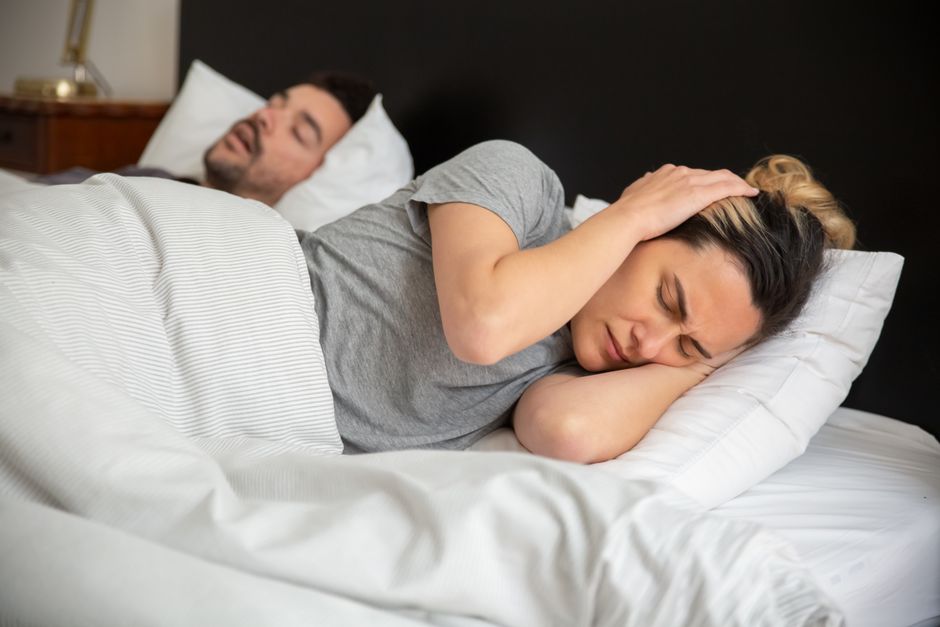
A mattress that creates pressure points causes "micro-awakenings." You do not fully wake up, but your brain shifts from deep sleep to lighter sleep to move you away from the discomfort. This can happen dozens of times per night without you remembering any of it.
Signs your mattress is the problem:
- You wake up with aches that fade within an hour of getting up
- You sleep better in hotels or guest beds
- You toss and turn more than you used to
- Your mattress is more than 7-8 years old
- You can see or feel a body impression where you sleep
Sleep Apnea
Your breathing stops repeatedly during the night. Each time, your brain wakes you just enough to restart breathing. You might stop breathing 30 or more times per hour without knowing it. Classic signs: loud snoring, gasping during sleep, morning headaches, and feeling exhausted no matter how long you sleep.
This needs medical attention. If your partner says you snore heavily or stop breathing, talk to a doctor about a sleep study.
Your Room Is Too Warm
Your body temperature drops when you fall into deep sleep. If your bedroom is too hot, or your mattress traps heat, your body fights to cool down instead of staying in deep sleep.
Ideal bedroom temperature is 65-68°F (18-20°C). If you wake up sweating or kicking off covers, temperature is probably disrupting your sleep cycles.
Caffeine Is Still in Your System
Caffeine has a half-life of 5-6 hours. That afternoon coffee at 3 PM still has half its caffeine in your system at 9 PM. You might fall asleep fine, but the caffeine interferes with deep sleep stages.
Try cutting off caffeine at noon for two weeks and see if your mornings improve.
Screen Time Before Bed
Blue light from phones and computers suppresses melatonin production. But it is not just the light. The mental stimulation from scrolling, reading news, or watching videos keeps your brain in alert mode when it should be winding down.
An hour of no screens before bed makes a noticeable difference for most people.
Alcohol
Alcohol helps you fall asleep faster but destroys sleep quality. It suppresses REM sleep in the first half of the night and causes fragmented sleep in the second half as your body metabolizes it. That is why you feel terrible after a night of drinking even if you slept 9 hours.
Stress and Anxiety
A racing mind does not just make it hard to fall asleep. It can keep pulling you into lighter sleep stages throughout the night. If you wake up in the middle of the night with your mind already churning about tomorrow's problems, stress is fragmenting your sleep.
Quick Checklist: What Is Disrupting Your Sleep?
- Physical discomfort: Wake up sore? Mattress might be the issue.
- Temperature: Wake up hot or sweating? Room or mattress is too warm.
- Breathing: Snore heavily or wake gasping? Could be sleep apnea.
- Timing: Caffeine after noon? Alcohol within 4 hours of bed?
- Environment: Room too bright, too noisy, phone on nightstand?
- Stress: Mind racing when you wake at 3 AM?
What Actually Helps
Fix Your Sleep Surface First
This is where most people should start. Not because mattresses solve everything, but because they are the easiest factor to test. Sleep on your couch for a night. Sleep in a hotel. Sleep at a friend's house. If you feel better anywhere except your own bed, you have found your problem.
A mattress that matches your body weight and sleep position eliminates one major source of sleep disruption. It will not fix sleep apnea or anxiety, but it removes physical discomfort from the equation.
Keep a Consistent Wake Time
Your body has a natural rhythm. Waking at the same time every day, including weekends, helps your internal clock regulate sleep cycles properly. The wake time matters more than the bedtime.
Make Your Room a Cave
Dark, cool, quiet. Blackout curtains if streetlights shine in. White noise or earplugs if you have noisy neighbors. Keep the thermostat at 65-68°F. Remove anything with a glowing light.
Address Medical Issues
If you have tried fixing your environment and habits for 2-3 weeks with no improvement, see a doctor. Sleep apnea, thyroid problems, anemia, and other conditions need medical treatment. A sleep study can identify problems you would never catch on your own.
The Two-Week Test
Pick one thing to change and stick with it for two weeks. No caffeine after noon. Or a consistent wake time. Or a different sleeping surface. Track how you feel each morning. Two weeks gives your body time to adjust and show whether the change actually helps. Trying five things at once tells you nothing about what worked.
When the Problem Is Your Mattress
If you identified physical discomfort as a likely culprit, here is what to look for:
Side Sleepers
You need cushioning at the hips and shoulders. A mattress that is too firm creates pressure points. Your body keeps micro-adjusting position all night to relieve that pressure, pulling you out of deep sleep.
Back Sleepers
You need support under your lower back. A mattress that sags in the middle lets your spine curve unnaturally. You might not feel pain, but your muscles work all night to compensate.
Hot Sleepers
Dense memory foam traps heat. If you wake up sweating, look for gel-infused foams, latex, or hybrid mattresses with coil layers that allow airflow.
Couples
If your partner's movements wake you, motion isolation matters. Memory foam absorbs movement. Innerspring transfers it. A queen might be too small if you are both spreading out.
Not Sure Where to Start?
Tell us what is happening. Do you wake up sore? Hot? Do you toss and turn? We will help you figure out whether your mattress is contributing to the problem or whether you should look elsewhere. Sometimes the answer is a new mattress. Sometimes it is a pillow. Sometimes we tell you to see a doctor first. We just want to help you solve the actual problem.
Frequently Asked Questions
Why do I wake up tired even after 8 hours of sleep?
Your sleep is being interrupted without you realizing it. Common causes include a mattress that creates discomfort, sleep apnea, a room that is too warm, caffeine still in your system, or stress that keeps your brain in light sleep stages. Eight hours of fragmented sleep leaves you more tired than six hours of uninterrupted sleep.
Can my mattress make me tired?
Yes. A mattress that does not match your body creates pressure points and discomfort. Your brain responds by shifting you to lighter sleep stages or causing micro-awakenings to change position. This can happen dozens of times per night without you remembering. You spend hours in bed but miss out on the deep sleep that actually restores your energy.
How do I know if I need more sleep or better sleep?
If you feel rested after sleeping 7-8 hours in a hotel or different bed, you probably need better sleep quality, not more hours. If you feel tired no matter where you sleep, you might need more hours or have an underlying condition. Most adults need 7-9 hours, but quality matters more than quantity. An hour of deep sleep beats three hours of fragmented sleep.
What is the best sleeping position for feeling rested?
The position that keeps your spine aligned without creating pressure points. For most people, that is on their back or side. Stomach sleeping tends to strain the neck and lower back. Whatever position you choose, your pillow and mattress need to support that position properly. A side sleeper on a too-firm mattress will wake up tired no matter how many hours they spend in bed.
Should I see a doctor about being tired all the time?
Yes, if improving your sleep environment and habits does not help after 2-3 weeks. Persistent fatigue can indicate sleep apnea, thyroid problems, anemia, or other conditions that need medical treatment. A sleep study can detect problems you would never identify on your own. If you snore heavily, wake gasping, or feel exhausted despite good sleep habits, see a doctor sooner rather than later.
Visit Mattress Miracle
Find us at 441 1/2 West Street, Brantford, Ontario. Rated 4.9 stars on Google. Family-owned since 1997.
How to Select the Right Sleep for Your Home
A practical guide to selecting the right sleep based on quality, comfort, and value.
Step 1: Understand what makes a quality sleep
Not all sleeps are created equal. Quality varies dramatically based on materials, construction methods, and manufacturing standards. Educate yourself on what to look for before shopping so you can spot genuine quality versus marketing hype.
Step 2: Match the product to your specific needs
Think about how you will use the sleep daily. Consider your body type, sleep habits, room size, and any health conditions. The right sleep for your neighbour may not be the right one for you. Personalization matters more than brand names.
Step 3: Set your budget and compare value, not just price
Decide what you can invest and then look for the best value within that range. A slightly more expensive sleep that lasts twice as long is better value than the cheapest option. Factor in warranty coverage as part of the total value.
Step 4: Test before you commit
If at all possible, test the sleep in person before purchasing. Mattress Miracle at 441 1/2 West Street in Brantford has an extensive showroom where you can try products hands-on. This single step prevents most buying regret.
Step 5: Buy from a trusted local retailer
Purchasing from an established local store gives you someone to call if you have questions or issues. Brad at Mattress Miracle has been serving Brantford since 1997. Real people, real advice, real support. Call 519-770-0001 or visit 441 1/2 West Street.
Brad, Owner, 40+ years of experience: "We have been helping Brantford families sleep better since 1997. Every customer gets personal attention, honest advice, and the kind of follow-up service you just do not get from big box stores."
Sources
- Walker M. Why We Sleep: Unlocking the Power of Sleep and Dreams. Scribner. 2017. ISBN: 978-1501144318.
- Okamoto-Mizuno K, Mizuno K. Effects of thermal environment on sleep and circadian rhythm. J Physiol Anthropol. 2012;31(1):14. DOI: 10.1186/1880-6805-31-14
- Krauchi K. The thermophysiological cascade leading to sleep initiation in relation to phase of entrainment. Sleep Med Rev. 2007;11(6):439-451. DOI: 10.1016/j.smrv.2007.07.001
- Haskell EH, Palca JW, Walker JM, Berger RJ, Heller HC. The effects of high and low ambient temperatures on human sleep stages. Electroencephalogr Clin Neurophysiol. 1981;51(5):494-501.
Visit Our Brantford Showroom
We are located at 441½ West Street in downtown Brantford. Free parking available, wheelchair accessible. Our team does not work on commission, so you get honest advice based on your needs.
Mattress Miracle , 441½ West Street, Brantford, ON · (519) 770-0001
Hours: Monday–Wednesday 10am–6pm, Thursday–Friday 10am–7pm, Saturday 10am–5pm, Sunday 12pm–4pm.