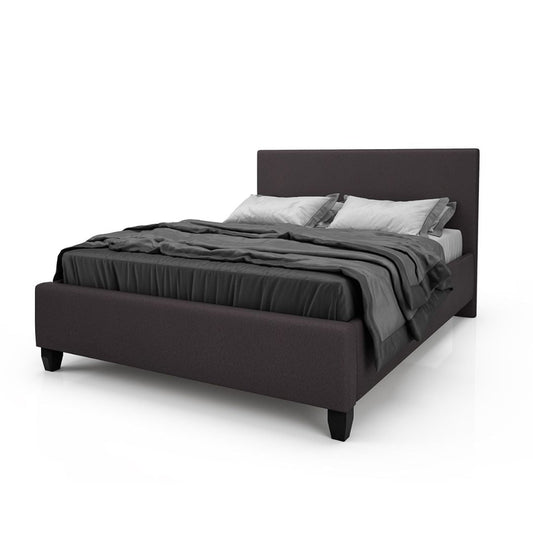
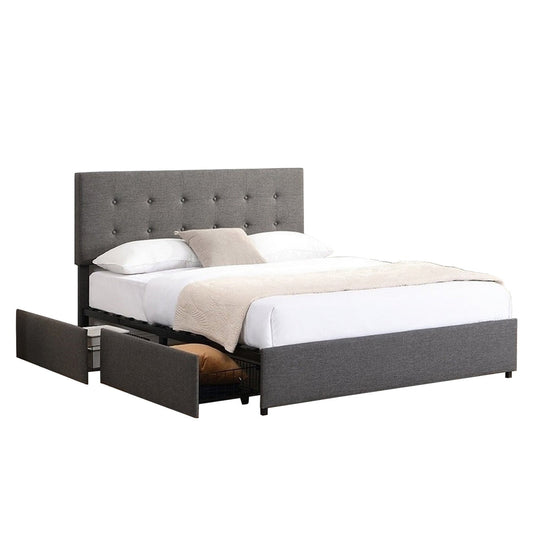
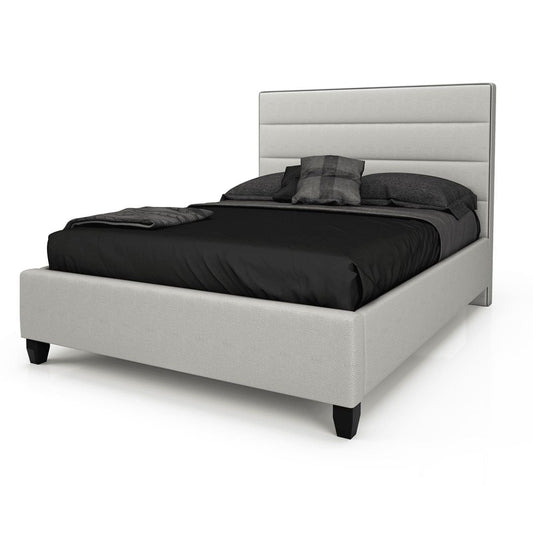
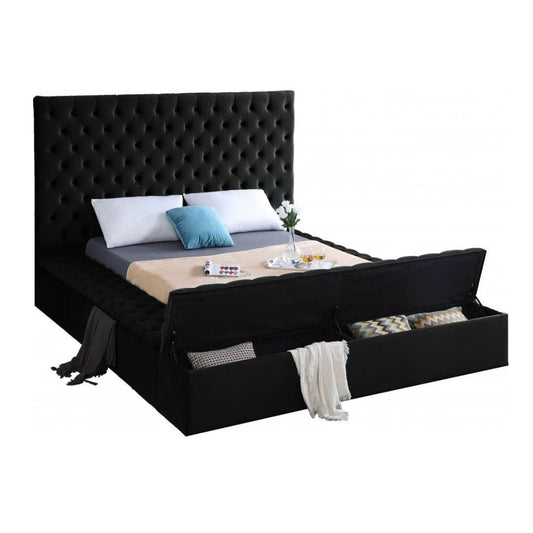
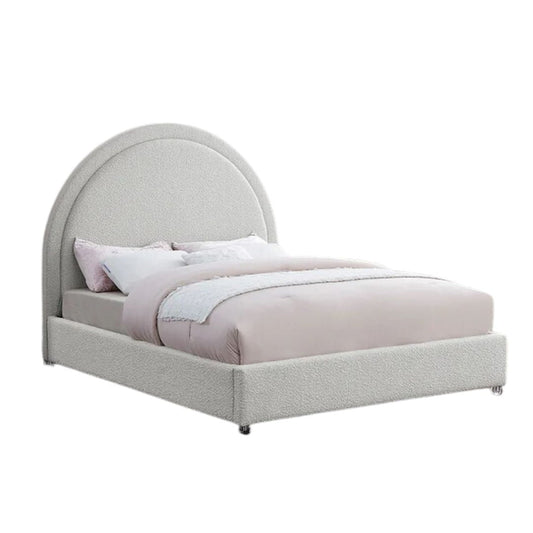
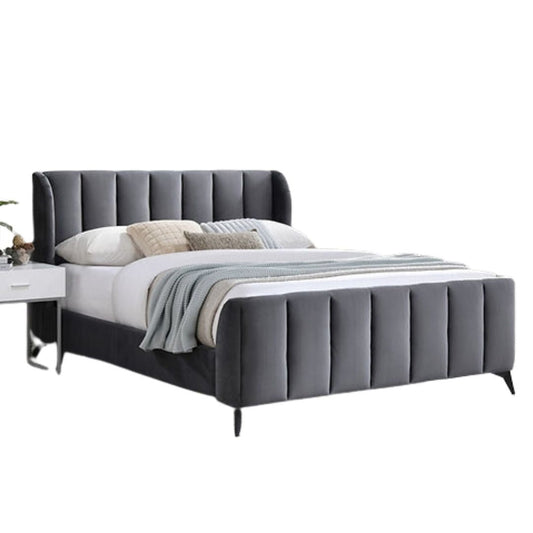
Quick Answer: A queen mattress base is the foundation that supports your mattress and affects both durability and sleep quality. Platform bases and solid foundations work best for modern foam, latex, and hybrid mattresses, while traditional box springs are designed for innerspring mattresses only. Standard queen dimensions are 60 by 80 inches. Expect to pay $150 to $500 for a basic foundation, or $800 to $2,000+ for an adjustable base.
In This Guide
Reading Time: 7 minutes
The queen mattress base under your mattress does more work than most people give it credit for. A good base provides even support, promotes airflow, prevents premature sagging, and can add years to your mattress's lifespan. A bad base, or no base at all, can void your warranty and cause comfort problems that even a brand-new mattress cannot fix.
At our Brantford showroom, one of the most common mistakes we see is customers buying an expensive mattress and then putting it on a base that does not suit the mattress type. A $1,500 mattress on the wrong foundation performs worse than a $800 mattress on the right one. Here is how to match them properly.
If you pair your queen mattress base with an adjustable frame, understanding your bed remote control options helps you get the most out of the investment.
Types of Queen Mattress Bases
| Base Type | Construction | Best For | Queen Price Range (CAD) | Lifespan |
|---|---|---|---|---|
| Box spring | Wood frame with steel coils, fabric covered | Traditional innerspring mattresses | $200-$500 | 8-10 years |
| Solid foundation | Rigid wood or steel grid, no flex | Memory foam, latex, hybrid | $150-$400 | 10-15 years |
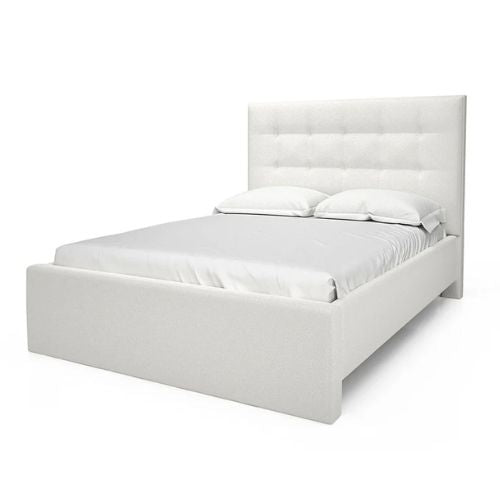
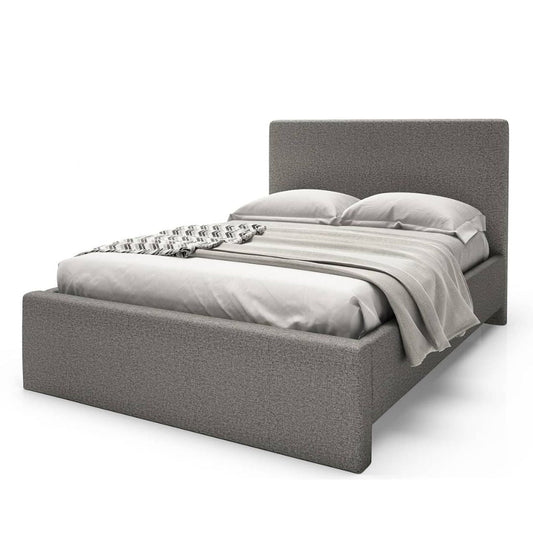
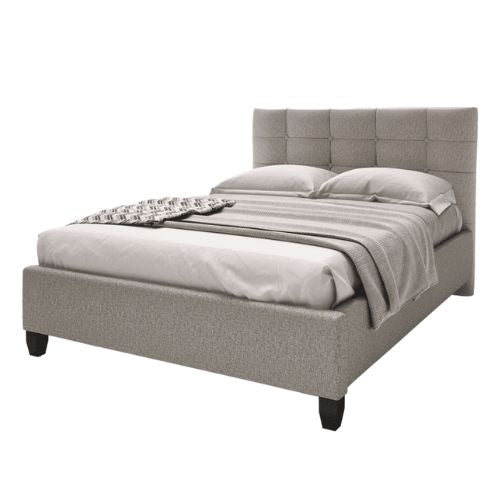
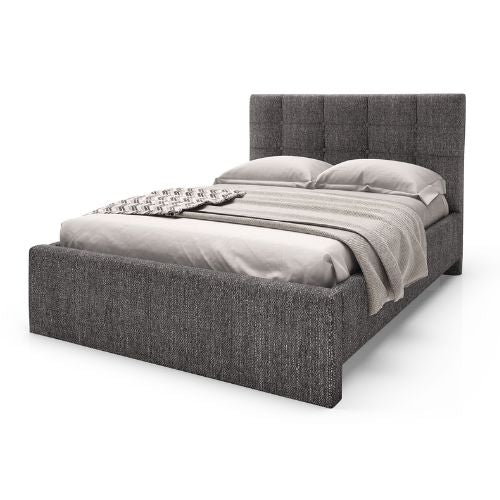
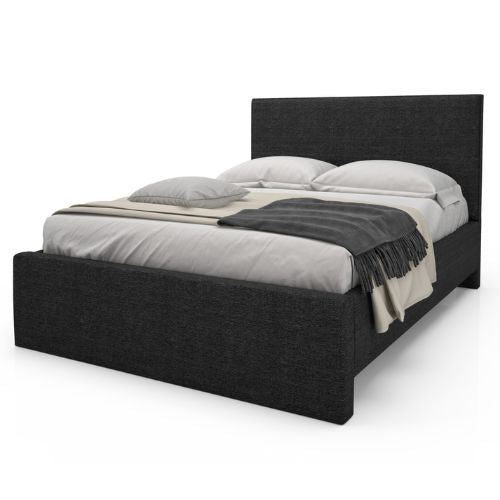
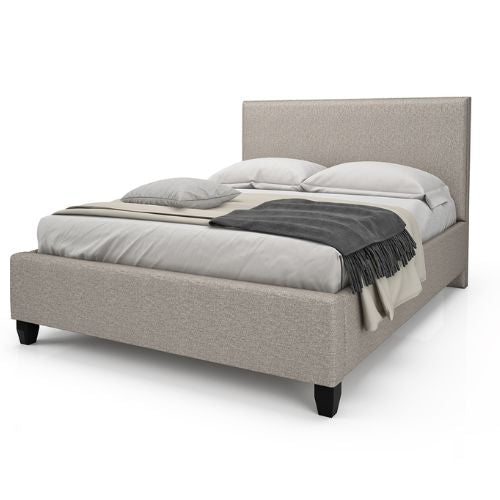
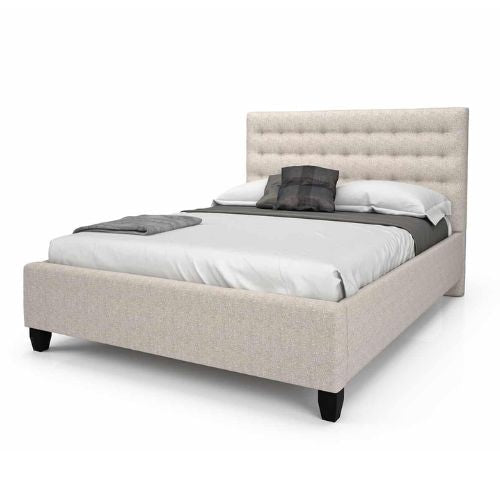
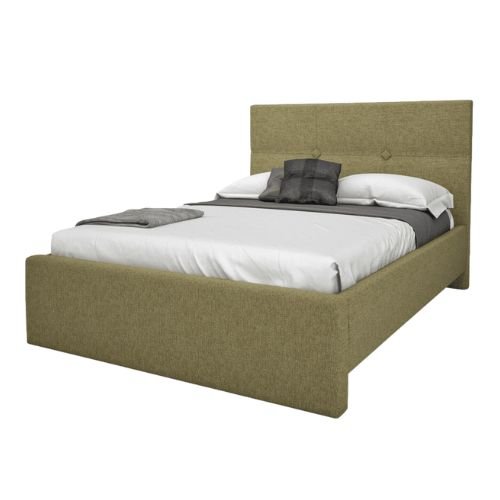
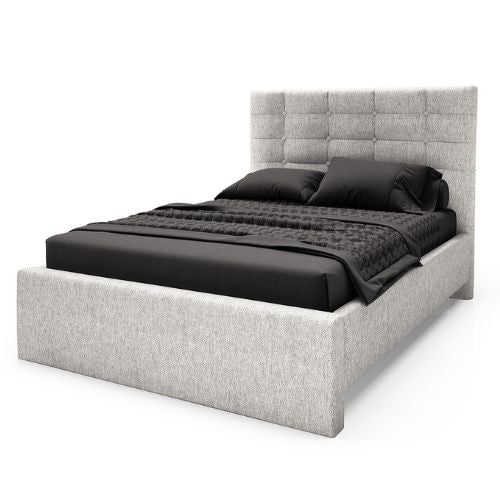
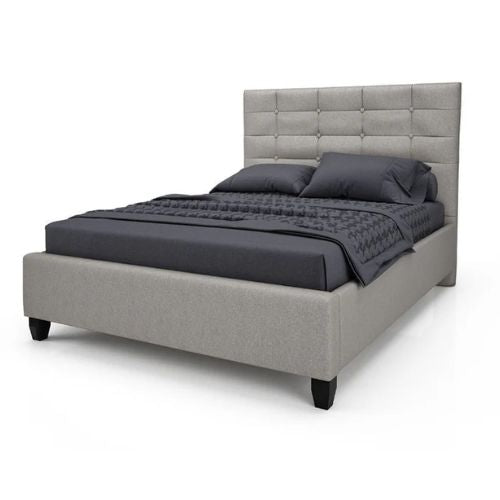
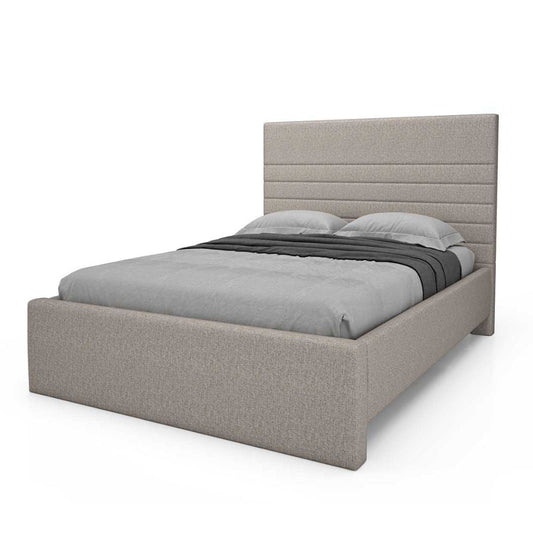
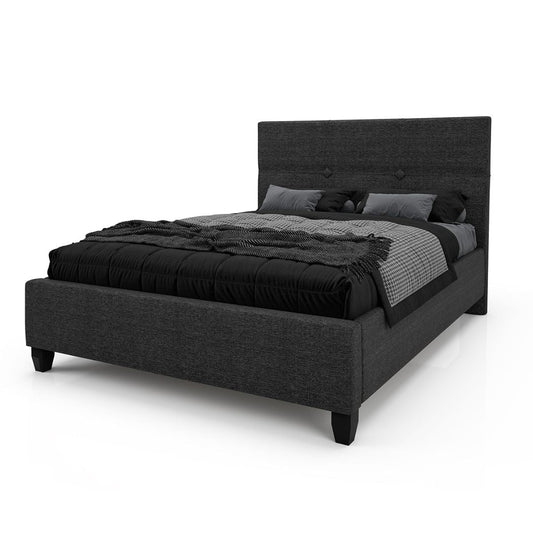
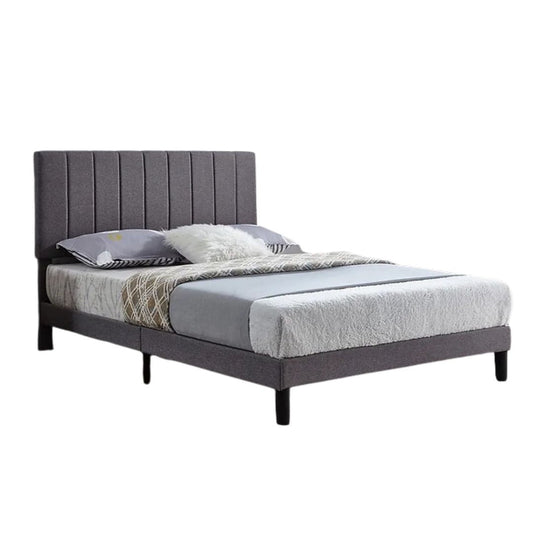
| Platform bed frame | Slatted or solid deck built into bed frame | Any mattress type (with proper slat spacing) | $200-$1,500 | 10-20 years |
| Slatted foundation | Wood or metal slats across a frame | Any mattress, but slat spacing matters | $100-$300 | 8-12 years |
| Adjustable base | Motorized frame, head and foot elevation | Foam, latex, some hybrids | $800-$2,500 | 10-15 years |
| Bunkie board | Thin slatted board (2-3 inches), fabric covered | Adding support to existing slatted frames | $80-$200 | 5-8 years |
Box Springs: Still Useful, But Not Universal
Box springs were the standard for decades because they were designed to work with traditional innerspring mattresses. The coils in the box spring absorb some of the impact and provide a slight give that complements the bounce of an innerspring mattress.
The problem is that box springs are not suitable for memory foam, latex, or most hybrid mattresses. These newer mattress types need a flat, rigid surface. Placing a foam mattress on a box spring can cause uneven support, faster foam degradation, and may void the mattress warranty. If you have a modern mattress, a box spring is almost certainly not the right base for you.
Solid Foundations: The Modern Standard
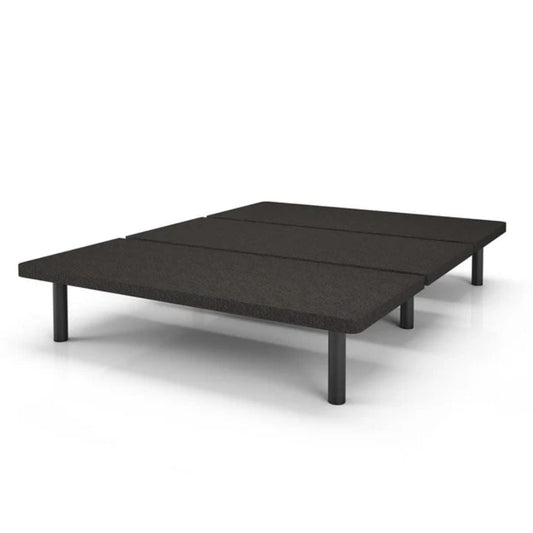
A solid foundation (sometimes called a platform foundation) is a rigid frame with a flat top surface, usually made from wood panels or a welded steel grid. It provides consistent, even support across the entire mattress surface. This is what most mattress manufacturers now recommend for foam, latex, and hybrid mattresses.
The key advantage is simplicity: no moving parts, no coils to wear out, no slats to shift. A solid foundation does one thing and does it well.
Slatted Frames: Watch the Spacing
Slatted bed frames are popular and work well, but slat spacing is critical. Most mattress warranties require slats to be no more than 3 inches (7.5 cm) apart. Wider spacing allows the mattress to sag between slats, creating pressure points and uneven wear patterns.
If your slatted frame has spacing wider than 3 inches, a bunkie board placed on top of the slats solves the problem. This thin, rigid board creates a solid surface for the mattress while keeping the existing frame.
Brad, Owner, 40+ years of experience: "The most common warranty claim I see rejected is mattress sagging caused by improper support. The customer buys a great mattress, puts it on an old box spring or a slatted frame with 5-inch gaps, and wonders why it starts dipping after a year. The base is the foundation of your sleep. If it is wrong, everything on top of it suffers."
8 min read
Matching Your Base to Your Mattress Type
Not every base works with every mattress. Here is the compatibility chart we use at our store.
| Mattress Type | Recommended Base | Avoid | Notes |
|---|---|---|---|
| Innerspring (traditional coils) | Box spring or solid foundation | Adjustable base (coils do not flex) | Box spring adds slight bounce and height |
| Pocketed coil (e.g., Restonic ComfortCare) | Solid foundation, platform, or slatted (<3" gaps) | Old box springs with worn coils | Pocketed coils need flat, even support |
| Memory foam | Solid foundation, platform, adjustable base | Box spring | Foam conforms to any surface irregularity |
| Latex | Solid foundation, slatted platform | Box spring | Slatted base improves airflow under latex |
| Hybrid (coils + foam layers) | Solid foundation, platform, some adjustable bases | Box spring | Check manufacturer recommendations |
| Flippable (e.g., Sleep In, Restonic Reflections) | Solid foundation or platform | Adjustable base | Flippable mattresses need a flat, rigid surface |
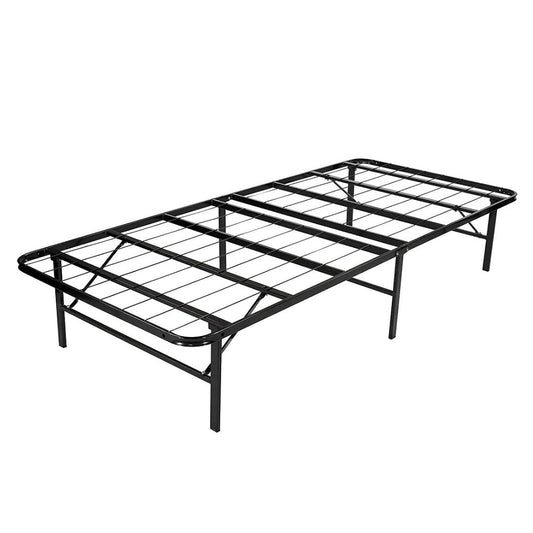
Our Restonic ComfortCare mattresses work best on a solid foundation or a platform frame with closely spaced slats. If you already have a platform bed, you likely do not need to buy a separate foundation. If you have a basic metal bed frame (the kind with just a perimeter and a centre support bar), you will need either a box spring or a foundation on top of it.
Queen Base Dimensions
A standard queen mattress in Canada measures 60 inches wide by 80 inches long (152 cm by 203 cm). Your base needs to match exactly.
| Dimension | Inches | Centimetres |
|---|---|---|
| Width | 60" | 152 cm |
| Length | 80" | 203 cm |
| Box spring height | 7-9" | 18-23 cm |
| Low-profile foundation | 4-5" | 10-13 cm |
| Bunkie board | 1-3" | 2.5-7.5 cm |
Base height matters for the overall bed height. A standard box spring (9 inches) plus a 12-inch mattress puts you at 21 inches from the floor. A low-profile foundation (5 inches) with the same mattress brings that down to 17 inches. Consider how easy it is to get in and out of bed at your preferred height, especially for older adults or anyone with mobility concerns.
Split Queen Bases
If you live in an older Brantford home (and many of us do), getting a full queen base up narrow staircases can be a challenge. Split queen foundations come in two pieces that connect once they are in the bedroom. They provide the same support as a single-piece base but fit through tight hallways and around corners. We carry split options and our white glove delivery team handles the setup.
Adjustable Bases: Worth the Investment?
Adjustable bases allow you to raise the head and foot of the bed independently using a motor and remote control. They have become increasingly popular for good reasons.
Who benefits most:
- People with acid reflux or GERD (elevating the head 6 to 8 inches reduces nighttime symptoms)
- Snorers and mild sleep apnea (head elevation opens the airway)
- Anyone who reads, watches television, or works in bed
- People with circulatory issues (elevating the feet reduces swelling)
- Couples with different comfort preferences (split queen adjustable bases allow independent positioning)
What to check before buying: Not all mattresses work on adjustable bases. Innerspring mattresses with bonnell coils and flippable mattresses generally cannot bend without damage. Memory foam, latex, and some hybrid mattresses are flexible enough to work on adjustable bases. Check your mattress warranty before pairing it with an adjustable base.
We carry adjustable bases at our Brantford showroom and can demonstrate them with different mattresses so you can feel the difference before committing.
Dorothy, Sleep Specialist: "The customers who get the most value from adjustable bases are couples. When one partner reads and the other wants to sleep, or when one partner snores but the other does not want their head elevated, a split adjustable base lets each person set their own position. It has genuinely reduced the number of 'sleep divorce' conversations we have in the store."
Common Mistakes to Avoid
Using a worn-out base with a new mattress. A new mattress on an old, sagging box spring will develop impressions faster and may void the warranty. If you are replacing your mattress, evaluate whether the base needs replacing too. Most bases last 10 to 15 years, but box springs may need replacement sooner.
Placing a mattress directly on the floor. No airflow underneath means trapped moisture, which promotes mould and dust mites. If cost is a concern, even a simple slatted frame from a home goods store is better than the floor. For more on mattress hygiene, see our guide on how to sanitize a mattress.
Ignoring slat spacing. Slatted frames with gaps wider than 3 inches (7.5 cm) cause uneven support. The mattress sags into the gaps over time, creating uncomfortable pressure points and accelerating foam breakdown. A bunkie board is an inexpensive fix.
Buying a base without checking the mattress warranty. Many mattress warranties specify what type of base is required. Using the wrong base (for example, a box spring under a memory foam mattress) can void the warranty entirely. Check the warranty card or manufacturer's website before purchasing a base.
Forgetting about bed height. Your base height plus your mattress height determines how tall your bed sits. If you have a 12-inch mattress on a 9-inch box spring on a 7-inch metal frame, you are looking at a 28-inch bed height. That may be difficult for shorter adults or children to get into comfortably. Low-profile foundations (4-5 inches) solve this when bed height is a concern.
Sources
- Caggiari, G. et al. (2021). "What type of mattress should be chosen to avoid back pain and improve sleep quality?" Journal of Orthopaedics and Traumatology, 22, 51.
- Khan, B. et al. (2012). "Effect of head-of-bed elevation during sleep in symptomatic patients of nocturnal gastroesophageal reflux." Journal of Gastroenterology and Hepatology, 27(6), 1078-82.
- Ravesloot, M. et al. (2013). "The undervalued potential of positional therapy in position-dependent snoring and obstructive sleep apnea." Sleep and Breathing, 17, 39-49.
- Health Canada (2024). "Indoor Air Quality: Moulds and Moisture." canada.ca
Shop This Topic at Mattress Miracle
Popular picks at Mattress Miracle:
- Restonic ComfortCare Dalton & Albany
- Whitney double-sided mattress
- Somnia 3.0 posture support pillow
Or shop the full mattress lineup in our Brantford showroom.
Find Your Perfect Mattress at Mattress Miracle
We are a family-owned mattress store in Brantford, helping our community sleep better since 1997. Come try mattresses in person and get honest, no-pressure advice.
441 1/2 West Street, Brantford, Ontario
Call 519-770-0001Frequently Asked Questions
Do I need a box spring with a queen mattress?
Not necessarily. Box springs are designed for traditional innerspring mattresses and add slight flex to the sleep surface. If you have a memory foam, latex, or hybrid mattress, a box spring is usually not recommended. These mattress types need a solid, flat surface for proper support. A platform base or solid foundation is a better match for modern mattress construction.
What size base do I need for a queen mattress?
A standard queen mattress measures 60 inches wide by 80 inches long (152 cm by 203 cm). Your base should match these dimensions exactly. A base that is too small allows the mattress to overhang, which can cause edge sagging and uneven wear. A base that is too large leaves gaps. Always verify both measurements before purchasing.
Can I put a queen mattress on the floor instead of a base?
You can, but it is not recommended long-term. A mattress on the floor has no airflow underneath, which traps moisture and creates conditions for mould growth. This is especially problematic in humid climates or on concrete floors. If you must use the floor temporarily, stand the mattress on its side for a few hours each week to allow the underside to air out.
How long does a mattress base last?
A quality queen mattress base typically lasts 10 to 15 years, often outlasting the mattress it supports. Metal platform frames and solid wood foundations tend to last longest. Box springs wear out faster, usually 8 to 10 years, because the internal coils lose tension over time. Replace your base when it develops creaking, visible sagging, broken slats, or uneven support.
Visit Our Brantford Showroom
Mattress Miracle
441 1/2 West Street, Brantford
Phone: (519) 770-0001
Hours: Mon-Wed 10-6, Thu-Fri 10-7, Sat 10-5, Sun 12-4
Not sure which base pairs with your mattress? Bring your mattress model or brand name and we will recommend the right foundation. We carry solid foundations, adjustable bases, and box springs for every bed type. White glove delivery includes setup and positioning.
Related Reading
Visit Our Brantford Showroom
We are located at 441 1/2 West Street in downtown Brantford. Free parking available. Our team does not work on commission, so you get honest advice based on your needs.
Mattress Miracle -- 441 1/2 West Street, Brantford, ON -- (519) 770-0001
Hours: Monday-Wednesday 10am-6pm, Thursday-Friday 10am-7pm, Saturday 10am-5pm, Sunday 12pm-4pm.
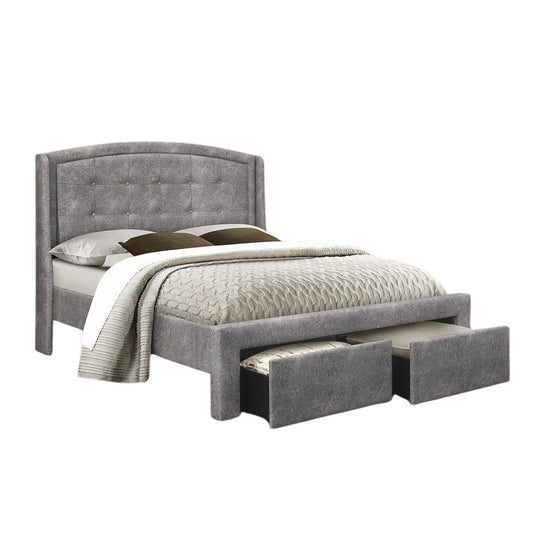
Come in and let our team help you find the right mattress for your needs. No pressure, no commission.