

Quick Answer: Stomach sleepers need a firm mattress (around 7 to 8 out of 10) to keep the spine and pelvis properly aligned and prevent lower back pain. A surface that is too soft lets the hips sink, hyperextending the lumbar spine. Use a thin pillow or no pillow to keep the neck neutral.
8 min read
Table of Contents
- Why Stomach Sleepers Need Firmer Mattresses
- Best Mattress Types for Stomach Sleeping
- Firmness Scale: What Works for Stomach Sleepers
- Pillow Considerations and Sleep Position Adjustments
- Why People Sleep on Their Stomach
- Testing Mattresses in Brantford: The 10-Minute Rule
- Frequently Asked Questions
Why Stomach Sleepers Need Firmer Mattresses


If you're among the 7% of people who sleep on their stomach, you've probably noticed that not every mattress feels right. There's a good reason for that.
When you lie face-down, your hips and pelvis are the heaviest parts of your body. On a soft mattress, they sink too deep, creating a curve in your lower back. This hyperextension puts strain on your spine throughout the night. By morning, you might wake up with that familiar lower back ache.
Sleep Science
Your spine has natural curves, but stomach sleeping exaggerates the lumbar curve. A firm mattress keeps your hips level with your shoulders, maintaining neutral spinal alignment and reducing pressure on the lower back muscles and discs.There's also the neck issue. Unless you've mastered breathing through your pillow, you need to turn your head to one side. This rotation puts strain on your neck muscles and cervical spine, especially if your pillow is too thick and forces your neck into an uncomfortable angle.
A firmer mattress won't fix the neck rotation, but it will keep your body more level, reducing the overall strain on your spine. Think of it like this: your mattress should support you, not swallow you.
Best Mattress Types for Stomach Sleeping
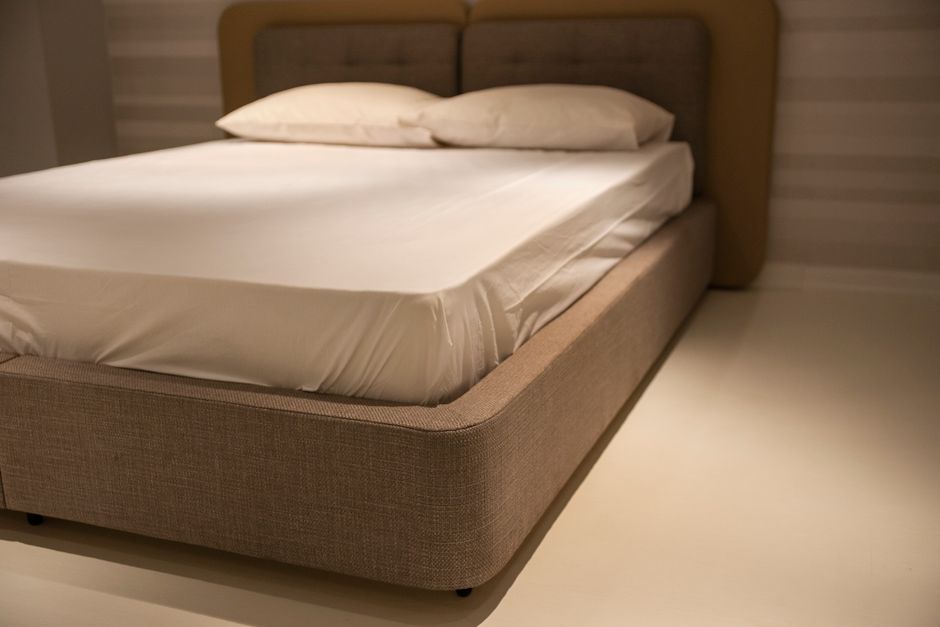
Not all firm mattresses are created equal. The type of construction matters as much as the firmness level.
Firm Innerspring Mattresses
Traditional innerspring mattresses with a firm coil system offer excellent support for stomach sleepers. The coils provide a stable, flat surface that prevents excessive sinking. Many of our Brantford customers who sleep on their stomach end up choosing a firm innerspring because it just feels right when they test it.
Look for mattresses with a lower coil gauge (thicker wire) and higher coil count for better support. A thin comfort layer on top provides just enough cushioning without compromising the firm foundation you need.
Firm Hybrid Mattresses
Hybrids combine coil support with foam or latex comfort layers. For stomach sleepers, the key is finding a hybrid that's labeled firm or extra firm. The coils give you that supportive base, while a thin comfort layer adds just a touch of pressure relief.
Mattress Guide
When testing hybrids, pay attention to how far your hips sink. If you can feel yourself forming a U-shape with your body, the comfort layer is too thick or too soft. Your body should stay relatively flat.We've been helping people find the right mattress since 1997, and one pattern we've noticed is that stomach sleepers often think they want a softer mattress until they actually lie on it for a few minutes. The initial plush feel is nice, but then you start to sink.
Firm Latex Mattresses
Natural latex is a great option for stomach sleepers because it's both firm and responsive. It pushes back against your body, keeping you on top of the mattress rather than sinking in. Latex also sleeps cooler than memory foam, which is a bonus if you tend to overheat.
Dunlop latex tends to be firmer than Talalay, making it the better choice for stomach sleepers. It has a denser, more supportive feel that keeps your spine aligned.
What to Avoid: Soft Memory Foam
Memory foam conforms to your body, which sounds great in theory. But for stomach sleepers, that conforming quality works against you. Your hips sink deeper than your shoulders, creating that problematic curve in your lower back.
If you love the idea of memory foam, look for a firm memory foam mattress with a high-density foam base. But honestly, most stomach sleepers do better with innerspring, hybrid, or latex.
Firmness Scale: What Works for Stomach Sleepers


Mattress firmness is typically rated on a scale from 1 (extremely soft) to 10 (extremely firm). Stomach sleepers generally need a firmness level between 7 and 8.
Here's how that breaks down:
- 5-6 (Medium): Too soft for most stomach sleepers. Your hips will sink, creating lower back strain.
- 7 (Firm): The sweet spot for many stomach sleepers, especially if you have a lighter build or want a touch of surface comfort.
- 8 (Extra Firm): Ideal for heavier stomach sleepers or those who need maximum support. Very little give.
- 9-10 (Ultra Firm): Possibly too firm. You want support, but also some pressure relief for your chest and shoulders.
Comfort Tip
Your body weight matters. If you weigh less than 130 pounds, you might do well with a 6.5-7 firmness. If you weigh more than 230 pounds, you'll likely need an 8 or firmer to get adequate support.Firmness ratings aren't standardized across brands, so a "firm" mattress from one manufacturer might feel different from another. This is why testing in person matters. You can't really know how a mattress will feel based on a number alone.
Pillow Considerations and Sleep Position Adjustments
Even with the perfect mattress, stomach sleeping creates challenges. Your pillow choice can make or break your comfort.
The Thin Pillow Rule
Stomach sleepers need a thin, soft pillow, or no pillow at all. A thick pillow forces your neck into an upward angle, compressing the cervical spine and straining neck muscles. Some people who sleep on their stomach actually sleep better with their head directly on the mattress.
If that feels too flat, try a thin down or down-alternative pillow that compresses easily. The goal is to keep your neck as neutral as possible while it's rotated to the side.
The Hip Pillow Trick
Here's something many stomach sleepers don't know: placing a thin pillow under your hips and pelvis can reduce lower back strain. It gently lifts your midsection, reducing the hyperextension in your lumbar spine.
It feels strange at first, but many of our customers tell us it made a noticeable difference in their morning back pain.
Transitioning to Side Sleeping
Some sleep experts recommend that stomach sleepers try to transition to side sleeping, which is easier on both your neck and lower back. If you're interested in trying this:
- Use a body pillow to prevent rolling onto your stomach
- Place a pillow between your knees to align your hips
- Start with short naps in the side position to get used to it
- Be patient with yourself - sleep positions are habits that take time to change
But if stomach sleeping is just how you're wired, don't force it. Focus on optimizing your mattress and pillow instead.
Why People Sleep on Their Stomach

Stomach sleeping often starts in childhood and becomes a deeply ingrained habit. But there are also practical reasons people prefer this position.
Some people find that stomach sleeping reduces snoring. When you're on your stomach, your airway stays more open because gravity isn't pulling your tongue and soft palate backward. People with mild sleep apnea sometimes gravitate toward stomach sleeping for this reason, though it's not a substitute for proper sleep apnea treatment.
Others just find it comfortable and secure. There's something about the pressure on your front body that feels grounding. It's similar to why weighted blankets are popular - that gentle, all-over pressure can be calming.
Brantford Context
At our West Street store, we've noticed that stomach sleepers often come in frustrated because they've tried mattresses that felt great in the showroom but caused pain after a few nights. The difference? They tested side-lying or back-lying, not stomach-lying. Always test in your actual sleep position.Whatever your reason for stomach sleeping, the goal is to make it as comfortable and spine-friendly as possible. That starts with the right mattress.
Testing Mattresses in Brantford: The 10-Minute Rule
We're grateful to help Brantford families find mattresses that actually work for how they sleep. One thing we always tell stomach sleepers: spend at least 10 minutes lying on your stomach on any mattress you're considering.
Here's what to pay attention to:
- Hip position: Do your hips feel supported, or are they sinking lower than your shoulders?
- Lower back: Is your back arched uncomfortably, or does it feel relatively neutral?
- Breathing: Can you breathe comfortably with your face turned to the side?
- Pressure points: Do you feel uncomfortable pressure on your chest or shoulders, or is it tolerable?
- Overall comfort: Could you imagine staying in this position for hours?
Don't rush this. A mattress that feels fine for 30 seconds might feel terrible after 10 minutes. And a mattress that feels too firm initially might start to feel just right as your body settles.
Come visit us at 441 1/2 West Street in Brantford. We've been doing this since 1997, and we're happy to talk through your specific needs. Bring your usual sleep clothes if you want - we want you to test the mattress in a way that actually tells you something useful.
Frequently Asked Questions
Is stomach sleeping bad for you?
Stomach sleeping puts more strain on your lower back and neck than side or back sleeping, but it's not inherently "bad" if you have the right mattress and pillow setup. A firm mattress that prevents hip sinking and a thin pillow to reduce neck strain can make stomach sleeping much more comfortable and reduce the risk of pain.
What firmness mattress is best for stomach sleepers?
Stomach sleepers generally need a firmness level of 7 to 8 out of 10. This prevents the hips and pelvis from sinking too deeply, which would create an uncomfortable arch in the lower back. Your body weight matters too - lighter people might prefer a 7, while heavier individuals often need an 8 or firmer.
Can memory foam work for stomach sleepers?
Memory foam is generally not ideal for stomach sleepers because it allows too much sinking, especially in the hip area. If you want memory foam, look for a firm, high-density version with strong support. Most stomach sleepers are happier with innerspring, hybrid, or latex mattresses that provide a more supportive, flat surface.
Should stomach sleepers use a pillow?
Stomach sleepers should use a very thin, soft pillow or no pillow at all. A thick pillow forces the neck into an upward angle, creating strain on the cervical spine. Some stomach sleepers also benefit from placing a thin pillow under their hips to reduce lower back hyperextension.
How do I stop sleeping on my stomach?
If you want to transition to side sleeping, try using a body pillow to prevent rolling onto your stomach, and place a pillow between your knees for hip alignment. Start with short naps in your new position to build the habit. Be patient - it can take weeks or months to change a lifelong sleep position. If it's not working, focus on optimizing your stomach sleeping setup instead.
Find Your Perfect Stomach Sleeper Mattress in Brantford
We've been helping people sleep better since 1997. Come test mattresses the right way - on your stomach, for as long as you need. No pressure, just honest advice from people who've seen it all.
Mattress Miracle
441 1/2 West Street, Brantford, Ontario
519-770-0001
Visit Mattress Miracle
Find us at 441 1/2 West Street, Brantford, Ontario. Rated 4.9 stars on Google. Family-owned since 1997.
Related Reading
- Best Mattress for Side Sleepers Canada
- Firm vs Soft Mattress: Complete Guide
- Mattress Firmness Guide
Sources
- Jacobson BH, Boolani A, Smith DB. Changes in back pain, sleep quality, and perceived stress after introduction of new bedding systems. J Chiropr Med. 2009;8(1):1-8. DOI: 10.1016/j.jcm.2008.09.002
- Radwan A, Fess P, James D, et al. Effect of different mattress designs on promoting sleep quality, pain reduction, and spinal alignment in adults with or without back pain. Sleep Health. 2015;1(4):257-267. DOI: 10.1016/j.sleh.2015.08.001
- Kovacs FM, Abraira V, Peña A, et al. Effect of firmness of mattress on chronic non-specific low-back pain: randomised, double-blind, controlled, multicentre trial. Lancet. 2003;362(9396):1599-1604. DOI: 10.1016/S0140-6736(03)14792-7
Medical Disclaimer: The information in this article is for educational purposes only and does not constitute medical advice. If you are experiencing chronic pain, sleep disorders, or other health conditions, please consult a qualified healthcare professional.
Find Your Perfect Mattress at Mattress Miracle
We are a family-owned mattress store in Brantford, helping our community sleep better since 1997. Come try mattresses in person and get honest, no-pressure advice.
441 1/2 West Street, Brantford, Ontario
Call 519-770-0001Frequently Asked Questions
Is stomach sleeping bad for you?
Stomach sleeping puts more strain on your lower back and neck than side or back sleeping, but it's not inherently bad if you have the right mattress and pillow setup. A firm mattress that prevents hip sinking and a thin pillow to reduce neck strain can make stomach sleeping much more comfortable and reduce the risk of pain.
What firmness mattress is best for stomach sleepers?
Stomach sleepers generally need a firmness level of 7 to 8 out of 10. This prevents the hips and pelvis from sinking too deeply, which would create an uncomfortable arch in the lower back. Your body weight matters too - lighter people might prefer a 7, while heavier individuals often need an 8 or firmer.
Can memory foam work for stomach sleepers?
Memory foam is generally not ideal for stomach sleepers because it allows too much sinking, especially in the hip area. If you want memory foam, look for a firm, high-density version with strong support. Most stomach sleepers are happier with innerspring, hybrid, or latex mattresses that provide a more supportive, flat surface.
Should stomach sleepers use a pillow?
Stomach sleepers should use a very thin, soft pillow or no pillow at all. A thick pillow forces the neck into an upward angle, creating strain on the cervical spine. Some stomach sleepers also benefit from placing a thin pillow under their hips to reduce lower back hyperextension.
How do I stop sleeping on my stomach?
If you want to transition to side sleeping, try using a body pillow to prevent rolling onto your stomach, and place a pillow between your knees for hip alignment. Start with short naps in your new position to build the habit. Be patient - it can take weeks or months to change a lifelong sleep position. If it's not working, focus on optimizing your stomach sleeping setup instead.